
Adventures on the West Coast: Piano Tuning in Nuchatlitz
by Jurgen Goering
It takes a certain degree of piano passion to travel 18 hours to tune one piano. Two years ago I was contacted by a gentleman living off the remote Northwest coast of Vancouver Island. He had recently moved a 1920 Heintzman upright from Victoria to his homestead on a small island in the middle of Nuchatlitz Provincial Park. This rigorous move included transport across a mountainous pass by logging road, winching the piano by crane onto a self-propelled barge, and an additional 3 hour sea voyage to its destination.
I was originally reluctant to make the long trip for the tuning due to the remote location, but Bob, the piano owner, finally persuaded me. In addition to paying for the tuning, he offered a return boat trip and beautiful cabin accommodation for my family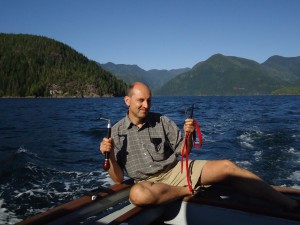 for the five day adventure. It turned out to be the opportunity of a lifetime to visit an area which is as renowned for its wildlife and landscape as it is for its remoteness. So from our home on Vancouver Island, we packed up the car, drove 4.5 hours to the end of the pavement and another 1.5 hours on winding gravel logging roads to a tiny village called Tahsis. Bob was waiting for us in his self-built wooden boat, the Nootka Rose. It was a three-hour cruise through mountainous fiords and channels to his island home where the protected coastal waters meet the open Pacific Ocean. Bob has lived there since 1974, where in true homesteading tradition he built his own cabin, house, boats, barge, and made his living numerous ways, including raising oysters. Twenty years after his arrival, the area was declared a provincial park due to its astounding natural beauty.

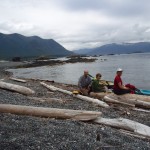 Nuchatlitz Park includes many islands, secluded basins and channels, and hundreds of rocky islets and reefs which break the oncoming swells of the open Pacific Ocean. The distant roar of surf can be heard day and night. The area is a mecca for kayakers who are attracted by its protected waters and rich variety of wildlife. Bob generously lent us his kayaks and rowboat, and we spent four days exploring the area. We swam in the cold ocean waters as seals popped their heads up close by to observe us. We passed by the sites of ancient first nations summer villages and longhouses, as bald eagles flew overhead. We tried fishing near the kelp beds and rocky beaches, while watching sea otters cracking shells open on their stomachs to eat the meat.
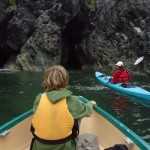 The underwater world revealed sea stars of varied colours, sea urchins, sea anemones, a dog-fish shark, oysters and other shellfish, along with many varied shorebirds. One day, from our kayaks, we watched a black bear wander along the beach and up a rocky bluff as it stopped to graze on plants and watch us. And another day we explored outer islands where the ocean swell was booming in and out of sea caves as our boats got pulled closer. On the last day we were lucky to watch a humpback whale as we traveled back through the narrows.
 Even though all these distractions abounded, at some point I had to buckle down and face the music. Before purchasing this piano, Bob had done his research. The piano he selected was a real Canadian Classic, a full-sized Heintzman upright from the golden years. The piano was in good mechanical condition: after two hours of pitch-raising and fine-tuning, my work was finished. My son Max entertained us with a performance of a Beethoven bagatelle. Bob has been studiously learning to play the piano, for his own pleasure. He also has visitors from around the world who are excited to find a piano in such a remote and unexpected location.
Having enjoyed our spectacular excursion in this corner of the world, I am secretly hoping that the piano doesn’t hold its pitch for too long. My family and I would jump at the opportunity to return to this beautiful spot for another episode of a Nuchatlitz adventure.
 Since 2009 Jurgen has been honored to work as the piano technician for the annual Hornby Island Music Festival. Once again in August of 2012 he spent close to a week on beautiful Hornby Island while preparing and tuning the piano at the community hall, where most of the concerts take place. The performers included jazz pianist John Stetch and the violin and piano duo of Jasper Wood and Arthur Rowe. Jurgen looks forward to the 2013 Hornby Island Festival. For more information:
 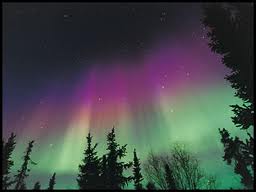 The snow is crunching under my feet as I lean into the rope around my waist. I am trudging my way across the frozen bay of Great Slave Lake pulling a heavy toboggan behind me loaded with a long box. Ahead of me, the yellow sodium lights of the city of Yellowknife reach up into the northern sky, almost merging with the pale green aurora borealis above. It is only October, but darkness comes early at 62º northern latitude this time of the year; as does winter.
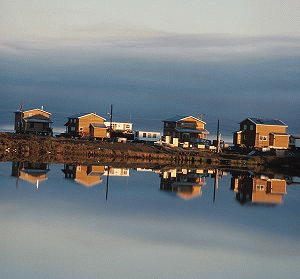 Travelling to and working in Canada’s arctic and subarctic regions requires flexibility, ingenuity and perseverance, no matter what field of occupation. Getting there is usually the beginning of the adventure. Most northern communities can only be reached by airplane, and inclement weather often leads to flights being late, canceled or rerouted. With winter lasting up to eight months of the year, severe temperatures and winds, along with snow and ice are constant factors to be reckoned with. Northern airports are small, colourful, cultural meeting places. Here, bureaucrats in three piece suits scan the baggage carrousels for their luggage alongside bearded prospectors, burly miners, geologists and biologists in fashionable cold weather gear, and locals in traditional parkas. The women are often wearing beautiful beaded sealskin boots and are carrying a child (or sometimes two!) in their amoutis – oversized hoods on their parkas.